
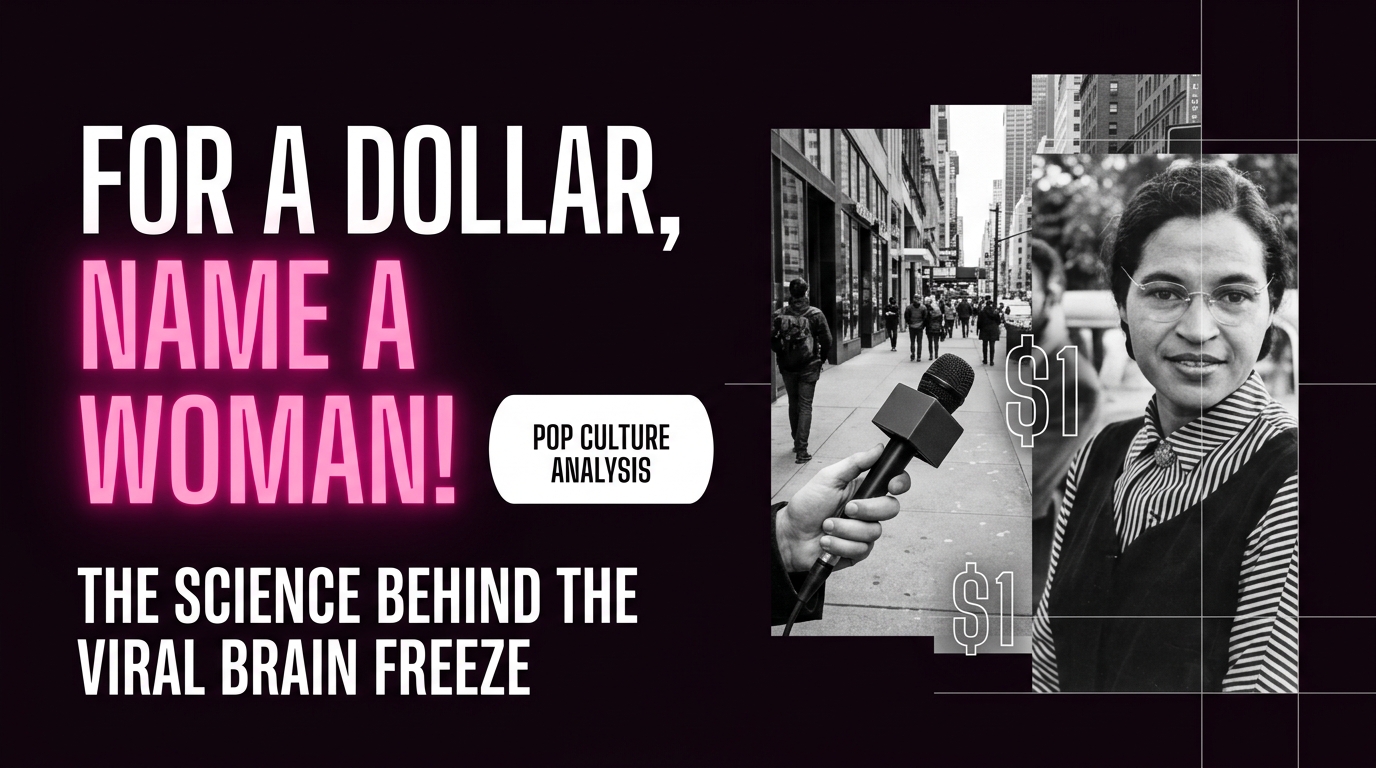
On TikTok and Instagram, the #NameAWomanChallenge has been replicated tens of thousands of times across boyfriends, roommates, trivia buffs, and celebrities. The outcome is remarkably consistent: when ambushed without warning, people freeze.
This breakdown tracks the cultural history of the viral trend, examines why your brain short-circuits under ambush questions, and outlines the exact memory techniques you can use to conquer the challenge on Name 100 Women.
1. The Anatomy of an Internet Phenomenon: What Happened in 2014?
The original segment aired during Season 3 of Billy on the Street. Eichner, microphone in hand and camera crew in tow, bounded toward Elena as she walked through Manhattan.
A. The 20-Second Brain Freeze
Eichner posed the simplest conceivable question: “Miss, for a dollar, name a woman.” Elena blinked, gasped, and stared ahead in complete silence for over fifteen seconds. When Eichner pushed louder (“Name ANY woman! Name one woman!”), her working memory scrambled completely. Her only verbal response was a panicked, defensive excuse: “I’m going to yoga, I have a yoga bag!”
In that moment, she couldn’t name her mother, her friends, herself, or any woman in recorded human history.
B. The TikTok Replication Explosion
Years after the broadcast, TikTok creators revived the bit. People began ambushing friends, partners, and coworkers with the exact same line: “For a dollar, name a woman.”
The results were stunningly predictable. Smart, articulate adults with advanced degrees visibly choked on camera. Elena wasn’t an anomaly. Her mental freeze exposed a universal glitch in how human memory retrieves information under pressure.
2. The Neuroscience of the Freeze: Cortisol, Ambush & Semantic Blocking
Why does your brain draw a total blank when there are literally four billion valid answers? Cognitive neuroscientists point to three compounding neurological triggers:
A. Acute Stress and Prefrontal Working Memory Inhibition
When someone charges at you with a microphone and elevated volume, your sympathetic nervous system fires a fight-or-flight alert. Your adrenal glands pump out cortisol and adrenaline.
That sudden cortisol spike immediately impairs transmission across the dorsolateral prefrontal cortex (DLPFC). This is the exact control room responsible for active working memory, task switching, and deliberate mental search. Under acute social pressure, your conscious retrieval pathway temporarily locks up.
B. Lateral Semantic Inhibition in Unbounded Search Spaces
Human semantic memory works like an interconnected electrical web. When you search for a concept, related nodes fire to suggest candidate answers.
When a category has tight boundaries (for instance, “Name a female Nobel laureate in physics”), only a few nodes fire, allowing your brain to serve up Marie Curie in milliseconds. But when a category is unbounded (containing billions of living and historical women), thousands of memory nodes light up simultaneously. These candidates produce lateral inhibition: competing memory signals crowd the neural exit, suppress each other, and stall your working memory in dead silence.
| Prompt Type | Cognitive Search Space | Average Neural Latency | Retrieval Success Rate |
|---|---|---|---|
| Unbounded Ambush (“Name a woman!”) | >4,000,000,000 candidate nodes | 8.5 – 18.2 seconds (or total freeze) | ~18% immediate recall |
| Anchored Categorical (“Name a female chemist”) | ~100 candidate nodes | 0.8 – 1.6 seconds | ~94% immediate recall |
| Relational Personal (“Name your sister”) | 1 – 3 candidate nodes | <0.5 seconds | ~99% immediate recall |
3. The 3 Historical Figures That Guarantee You Never Blank
To guard your memory against the “Name a Woman” panic, speedrunners use instant semantic anchors: monumental historical figures so tied to specific milestones that they bypass lateral inhibition entirely.
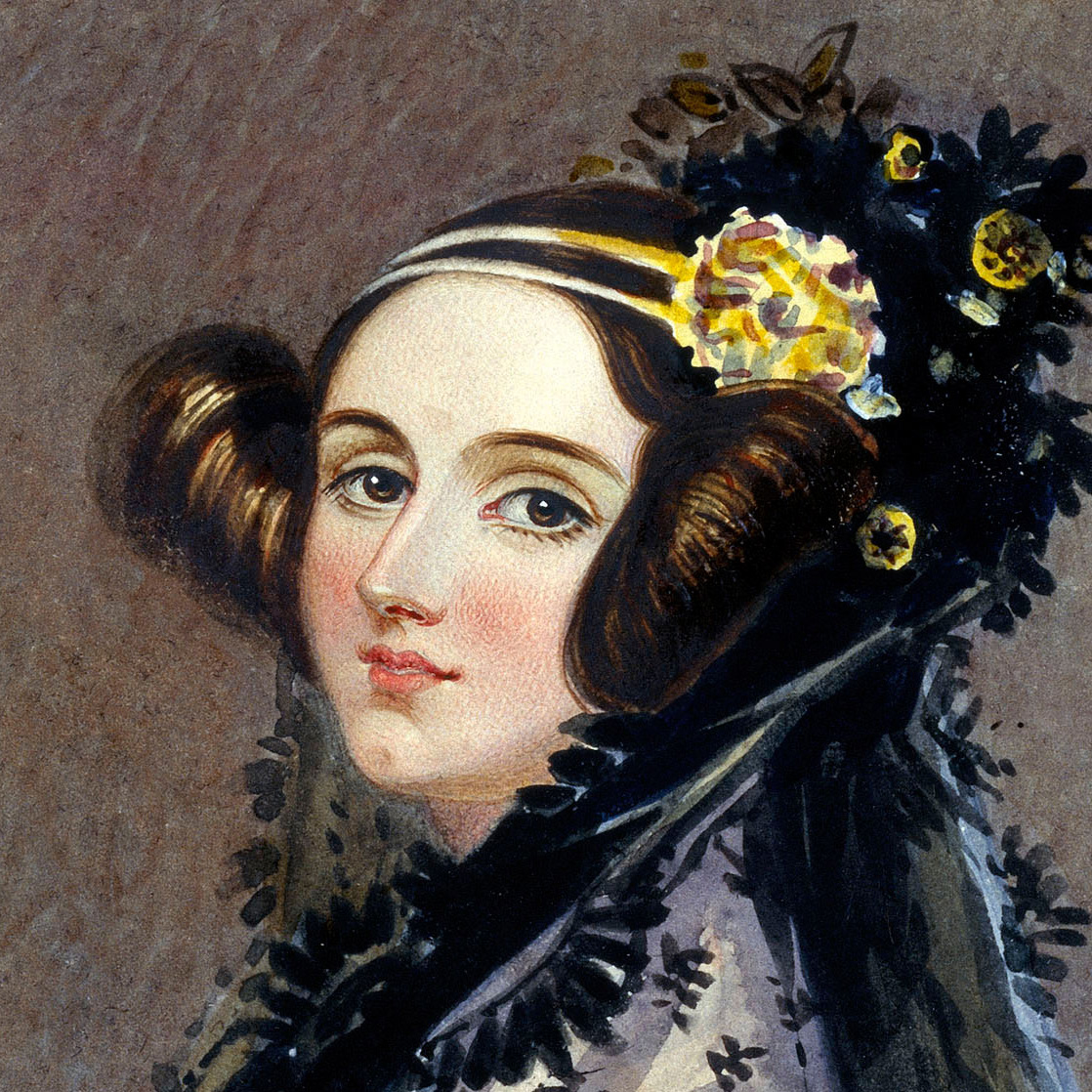
1. Ada Lovelace (1815–1852): Computing’s Founding Architect
Whenever you feel put on the spot, anchor your brain to technology. Augusta Ada King, Countess of Lovelace, published Note G in 1843 for Charles Babbage’s Analytical Engine. She wrote the world’s first published machine algorithm and predicted that computers could manipulate symbols beyond numbers, foreseeing software a century before the first transistor was built.
2. Rosa Parks (1913–2005): The Civil Rights Catalyst
Anchor to social history. On December 1, 1955, Rosa Parks quietly refused to give up her seat on a segregated Montgomery bus. Her quiet bravery ignited the 381-day Montgomery Bus Boycott, propelled Dr. Martin Luther King Jr. to international leadership, and delivered a decisive blow against statutory segregation in the American South.
3. Marie Curie (1867–1934): The Double Nobel Pioneer
Anchor to the physical sciences. Marie Curie remains the only scientist in history awarded Nobel Prizes in two different fields: Physics in 1903 and Chemistry in 1911. She discovered radium and polonium, coined the word radioactivity, and refused to patent her extraction processes so medical treatments could reach cancer patients without delay.
4. Leveling Up to the 100 Women Challenge
Nailing one name during a street ambush is fun, but testing your working memory across history is a bigger game. Can you retrieve 100 prominent women across history against a running clock?
That challenge is the core of the Name 100 Women Challenge on name100woman.com.
Rather than relying on random guesswork, competitive speedrunners break the roster into six balanced chambers:
- Science & Technology (17): Marie Curie, Ada Lovelace, Rosalind Franklin, Hypatia, Chien-Shiung Wu, Grace Hopper…
- World Leaders & Reform (17): Harriet Tubman, Rosa Parks, Cleopatra, Hatshepsut, Eleanor Roosevelt, Malala Yousafzai…
- Literature & Thought (17): Jane Austen, Murasaki Shikibu, Mary Shelley, Toni Morrison, Virginia Woolf, George Eliot…
- Arts & Performance (17): Frida Kahlo, Artemisia Gentileschi, Billie Holiday, Aretha Franklin, Yayoi Kusama…
- Sports Pioneers & Explorers (16): Serena Williams, Amelia Earhart, Wilma Rudolph, Valentina Tereshkova, Junko Tabei…
- Cultural Figures (16): Influential archetypes and pioneers who shaped storytelling across generations.
5. Frequently Asked Questions (FAQ)
Q1: Did Elena ever name a woman?
Yes. In a follow-up episode of Billy on the Street, Eichner tracked Elena down to give her a chance at redemption. Free from the initial ambush panic, she immediately fired back with “Michelle Obama!” and claimed her one-dollar bill.
Q2: Why does this brain freeze happen to women just as often as men?
Because the reaction is neurological, not cultural. Lateral inhibition and acute stress affect prefrontal cortex signaling across all demographics. When sudden social pressure meets an infinite search field, anyone’s working memory can stall.
Q3: How does the Name 100 Women challenge work?
Head to name100woman.com/#challenge and start the 15-minute timer. As you type into the entry field, the engine matches your answers against an index of historical aliases, married surnames, and spelling variations, unlocking masked cards on your board in real time.
6. Put Your Memory to the Test
The next time someone puts you on the spot, you don’t have to freeze like Elena with her yoga bag. Choose an anchor category, narrow your mental search, and trust your recall. When you’re ready for the full speedrun, jump over to the Name 100 Women Challenge, hit start on the countdown clock, and see how many of the 100 you can name before time runs out.